Tyler Boon's search for a custodian connection, not just a platform
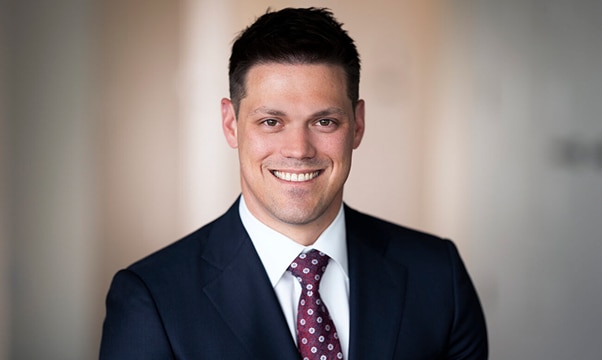
"A custodian should be a seamless extension of your operations department. If it's not, it might be time for a change."
Key Points
-
The wake-up call: Boon assumed most custodians were basically the same until everyday problems started piling up. Routine tasks took too long, clients grew frustrated, and too much time was spent fixing preventable issues.
-
The breaking point: The COVID-19 pandemic exposed how difficult the firm's systems had become to manage, especially as remote work and increased client needs put even more pressure on the team.
-
The move to Schwab: Moving to Schwab gave the firm tools and support that made day-to-day work easier for both clients and employees, freeing the team to spend more time on conversations and relationships instead of administrative problems.
The myth of the plug-and-play custodian
In the early stages of building an independent Registered Investment Advisor (RIA) firm, many advisors assume custodians are interchangeable. The thinking goes that if the platform offers the basics—trading, reporting, and account support—the rest will fall into place. But once those firms are up and running, the importance of true operational support over standard tools becomes clear.
"I thought the value of custodians was relatively commoditized," Tyler says, "but that wasn't the case. Our cultures and values were so mismatched. It caused a lot of operational inefficiencies."
When Tyler launched Jupiter Wealth Management in 2018 with his parents, Jim and Ann, the focus was on building an independent firm that could serve clients with greater flexibility. Like many advisors starting an RIA firm, they selected a custodian and technology stack that looked good on paper.
Soon small operational frustrations turned into regular bottlenecks, and they realized their custodian was at odds with their values.
For an advisory firm focused on client relationships, operational friction adds up quickly. Tyler recalls routine tasks becoming overly complicated. "If we had an international wire, it could take hours to get it out," he says. "Sometimes we'd have the client on the phone with the custodian just to get something processed."
Individually, these delays might seem minor. Over time, they create a constant drag on the firm's ability to operate efficiently. "It's hard to assign a dollar value to those pain points," Tyler says. "But the costs are real."
Tyler was forced to reconsider the role of his custodian. "A custodian should be a seamless extension of your operations department," he says. "If it's not, it might be time for a change."
The stress test
That realization hit hard in 2020. Shortly after launching his firm, the COVID-19 pandemic disrupted markets and forced businesses everywhere into remote work. Jupiter Wealth Management suddenly faced an intense operational test. Client needs increased. Communication moved almost entirely online. Every process had to work smoothly.
Under this new pressure, the administrative cracks in the firm's original setup became harder to ignore. Slow turnaround times or tasks that required extra steps or manual oversight quickly got in the way of serving clients efficiently.
Looking back, Tyler realized the firm simply didn't know what to look for when choosing its original systems. "I'm not saying we got bad advice," he says. "We didn't know what questions to ask until we were running into situations where we had the wrong tool in our hand."
For a firm committed to high-touch service, that created a difficult tension.
"Our goal has always been to deliver the best possible experience for our clients," Tyler says. "But if the infrastructure behind the scenes isn't working smoothly, it limits what you can do."
He had to reconsider whether the firm's custodial relationship was helping the business grow—or slowing it down.
"We don't have to think about Schwab every day, and I mean that in a good way. We have a good flow and a good cultural fit with Schwab. Stuff just works."
The eleventh-hour pivot
After reviewing alternatives, Tyler made a decision that many advisors hesitate to make. He decided to move the firm to a new custodian—even though Jupiter Wealth Management had launched only two years earlier.
The timing raised understandable questions. Clients naturally asked, "Tyler, we just moved two years ago when you opened your firm. Why are we moving again?" For Tyler, the answer was straightforward.
Jupiter Wealth Management didn't need just a new website, a different fee schedule, or a generic interface. The firm needed a custodian to be a seamless extension that aligned with how Tyler wanted to serve clients. He needed a resource that would reduce the administrative burden rather than add to it.
He chose Schwab.
Key reasons Tyler Boon chose Schwab
When Tyler was evaluating custodians, a few things were nonnegotiable:
- Good cultural fit with his firm's service philosophy
- An intuitive client website experience
- Digital onboarding process to simplify account opening
- A solutions-focused service approach
- Support teams willing to go the extra mile
The move was smoother than expected. Schwab's transition team helped guide the firm through the move, while digital onboarding tools made it easier for clients to complete paperwork and open accounts remotely.
The timing of the pandemic, ironically, made some aspects of the transition easier.
"Our clients were mostly homebound and already comfortable using technology and video calls," Tyler says. "We really leaned on Schwab's digital account-opening tools during the transition."
By changing providers, Tyler removed the operational friction that had been slowing the firm's growth. "Our clients adapted quickly," he says. "And the overall experience improved almost immediately."
What changed for the better
Soon they noticed that reduced operational hurdles meant more time to focus on their core mission: nurturing one-on-one client relationships. And those clients got a better digital experience, with a more intuitive website and faster digital account opening.
"We don't have to think about Schwab every day, and I mean that in a good way," Tyler says. "We have a good flow and a good cultural fit. Stuff just works."
As clients got comfortable handling simple requests online, their conversations started to shift. "If a client moves money, we can follow up and talk about what's going on in their life," Tyler says. "We can focus on having that kind of quality conversations instead of spending time on administrative requests."
For Tyler, the lesson was clear: The right operational infrastructure doesn't just make a firm more efficient. It gives advisors more time to focus on what matters most—their client relationships.
Advice for advisors choosing independence
Today, Tyler often speaks with advisors who are exploring independence but are worried about losing the support systems they have at larger firms. Many assume that going independent means giving up resources. Tyler's experience has shown the opposite.
"We've found that the resources available to us as an RIA meet or exceed what we had at a big firm," he says. For advisors evaluating custodians, Tyler believes the most important factor is alignment—not just in technology but in culture and service philosophy.
"You may look like a winner on paper. But the real wins come when your partners share your culture and values," he says.
For Tyler, those values extend beyond the business. His children share his love of the outdoors. As for finance, it's too early to tell. "Each generation looks at money and life differently," he says. If they one day join Jupiter Wealth Management, Tyler will mentor them to value independence and serve clients with integrity.
What you can do next
- Learn more about why independent advisors choose Schwab Advisor Services™ and explore resources on choosing the right custodian for your firm.
- If you're thinking about making a move, contact us to talk with our team and get your questions answered.
Tyler Boon is a client of Schwab and was not compensated for his comments. The experience described may not be the experience of all clients and is not a guarantee of future performance or success.
This material is intended for general informational and educational purposes only.