The rise of Gen Z: How RIA firms can plan ahead

Key Points
-
- Trillions of dollars will transfer to Gen Z over the next few decades.1 It's time to make a game plan to connect early with these investors and grow with them over time.
-
- Gen Z cares about social values and a balanced life, so show them how your firm can help them invest with purpose.
-
- This new generation of investors is hungry for know-how and very open to advice. Bring your clients' kids and grandkids into money conversations early.
The oldest Gen Zers turn 30 in 2027, and many have made some serious financial progress. According to the Federal Reserve, younger millennials and older Gen Zers more than quadrupled their median wealth in three years—the fastest generational wealth reversal in modern financial history.2
Over the next few decades, $70-90 trillion is expected to move from Baby Boomers to their heirs.2 Yes, Gen Z lives online, but they also crave closeness3 and want to get smarter about money.4 Before you know it, Gen Z may be coming in hot looking for professional help. Are you ready?
Here are five things to know about Gen Z that can help you build stronger bonds with the whole family and be ready for the next wave of new clients.
1. They're dealing with debt
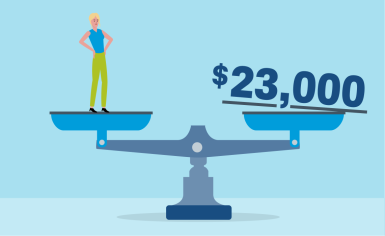
Four-year college tuition has been hitting six figures for a couple of decades now. Law and medical school costs are even higher. So, it's not surprising that Gen Z is borrowing to pay for school. More than 43% of Gen Zers who are 18+ have college debt5 with an average balance of nearly $23,000.6
If your clients have Gen Z kids or grandkids, helping them manage debt can go a long way. Their families will be grateful, and it gives you a direct connection you can build on as their debt shrinks—and wealth grows.
2. They're ambitious, but want balance

Gen Z wants more than a paycheck. A recent Deloitte survey found they want meaningful work and prioritize learning and personal growth over climbing the corporate ladder.7 A survey of Gen Z investors backs up those findings, with 34.4% looking for personal enjoyment in a career and 41.7% wanting flexible hours.8
These are strong indicators that this generation is open—and ready—to plan right now. You can help them look at the full picture, put their money to work, and be ready to make the most of gifts or inheritances.
3. Socially responsible investing is a priority

Many Gen Zers lead with their values, which is why sustainable investing is top of mind. Datos Insights reports that two-thirds of Gen Z investors want to optimize portfolios around causes they care about9 and a Morgan Stanley survey found that 80% of Gen Z and millennial investors plan to increase their sustainable investment allocations.10
They're not alone. Most generations are interested in socially responsible investing on some level.11 Keeping up with socially responsible investments and offering transparent options that meet a range of goals is already a good strategy. As your focus shifts toward Gen Z clients, you might even lean more toward value-based investing.
4. They're hungry for knowledge
Who could forget the meme stock craze that ran through Gen Z like wildfire? It was an early lesson in how chasing smoke in markets can burn you. Now, many of those young investors aren't so young. They have jobs and 401(k)s and they're using those early experiences to build on investing basics.
Surveys by Vanguard and Schwab have found that Gen Z is investing earlier and becoming more patient.12 A recent CFP Board survey also found that 65% of college students want to learn more about personal finance and 56% expect they'll need investment advice after graduation.13
Yes, 60% of Gen Z go to YouTube for financial information,14 and more than 60% are already using AI to manage finances15—but they also know there’s only so much videos and bots can do. They're ready to hear from an expert like you, especially if you and your clients invite them into money and finance conversations.
5. It's not just about tech
These digital natives expect info fast, but they also value in-person relationships. In fact, a Freeman survey found that 79% have made it a goal to interact more in the "real world."16
Easy-to-use tools are important for Gen Z, so an online portal is the bare minimum. Most are comfortable with automated investing tools but they're also turning to financial advisors earlier than previous generations. Northwestern Mutual found that 28% worked with a financial advisor in the past year and at an average age of 23—decades before the average Gen Xer or Boomer.17
Gen Z understands that life and money can be complicated. And they're familiar with how noisy the digital world can get. But ultimately, what they want isn't so different from what we all want—someone who's patient and knowledgeable to help cut through complexities and get them to their goals. As Gen Z's wealth grows, more of them will be looking for guidance from advisors like you.
What you can do next
- No matter what stage or age your clients are in, Schwab offers banking, trading, and asset management solutions that can help. Explore our wealth services.
- Curious about how Schwab helps RIAs? Wealth services, technology, and business support are just the beginning. Whether you're exploring independence or considering a custodian swap, we're here to help you take your next step.
1. "The Paradigm Shift: Millennial and Gen Z Investors and the Impending Wealth Transfer," CEG Insights, 2024.
2. "Next-Generation Client Acquisition and Engagement: Flexing to the Gen Z Opportunity," Datos Insights, June 2025.
3. "Why is social connection so hard for Gen Z?" StanfordReport, March 2025, https://news.stanford.edu/stories/2025/03/social-connections-gen-z-research-jamil-zaki.
4. "Gen Z College Students Hungry for Financial Education, New CFP Board Study Finds," CFP Board, February 2026, https://www.cfp.net/news/2026/02/gen-z-college-students-hungry-for-financial-education-new-cfp-board-study-finds.
5. "Student Loan Debt by Generation," Education Data Initiative, November 2024, https://educationdata.org/student-loan-debt-by-generation.
6. "Student Loan Debt by Generation," Education Data Initiative, November 2024, https://educationdata.org/student-loan-debt-by-generation.
7. "2025 Gen Z and Millennial Study: Growth and the Pursuit of Money, Meaning, and Well-Being," Deloitte.
8. "The Paradigm Shift: Millennial and Gen Z Investors and the Impending Wealth Transfer," CEG Insights, 2024.
9. "Next-Generation Client Acquisition and Engagement: Flexing to the Gen Z Opportunity," Datos Insights, June 2025.
10. "The Paradigm Shift: Millennial and Gen Z Investors and the Impending Wealth Transfer," CEG Insights, 2024.
11. "Research Reveals a Fundamental Shift in How Investors View ESG," Harvard Business Review, February 18, 2026, https://hbr.org/2026/02/research-reveals-a-fundamental-shift-in-how-investors-view-esg.
12. "They Invested in Meme Stocks. And Then They Grew Up.," New York Times, January 11, 2026, https://www.nytimes.com/2026/01/11/business/gen-z-meme-stocks-investors.html.
13. "Gen Z College Students Hungry for Financial Education, New CFP Board Study Finds," CFP Board, February 2026, https://www.cfp.net/news/2026/02/gen-z-college-students-hungry-for-financial-education-new-cfp-board-study-finds.
14. "Next-Generation Client Acquisition and Engagement: Flexing to the Gen Z Opportunity," Datos Insights, June 2025.
15. "2026 Financial Services Industry Outlook," Slalom, https://www.slalom.com/us/en/insights/financial-services-outlook-2026.
16. "2025 Gen Z Report," Freeman, https://www.freeman.com/resources/2025-gen-z-report/.
17. "Why Gen Z Is Turning to Financial Advisors Sooner Than Any Other Generation," Investopedia, July 15, 2025, https://www.investopedia.com/gen-z-seek-financial-advisors-help-11760084.
Because environmental, social and governance (ESG) strategies exclude some securities, ESG-focused products may not be able to take advantage of the same opportunities or market trends as products that do not use such strategies. Additionally, the criteria used to select companies for investment may result in investing in securities, industries or sectors that underperform the market as a whole.